Cross-Platform Synchronization Challenges Affecting Progressive Jackpot Accumulations in Global Online Networks
Elena Günther · Jul 16, 2026

Cross-Platform Synchronization Challenges Affecting Progressive Jackpot Accumulations in Global Online Networks
Progressive jackpots in online gaming environments rely on contributions from players across numerous platforms and jurisdictions yet maintaining consistent accumulation requires precise synchronization between disparate systems. Operators face ongoing difficulties when data packets travel between servers located in different regions while currency conversions and regulatory reporting standards add further layers of complexity. These issues have become more pronounced as networks expand to include mobile applications and third-party aggregators.
How Progressive Systems Pool Contributions Across Borders
Progressive jackpots grow through small percentages taken from each qualifying bet and the totals must update in real time for fairness and transparency. When platforms operate under separate software providers the data exchange occurs via APIs that sometimes experience delays or formatting mismatches. Observers note that a single missed contribution from one region can create discrepancies visible to players monitoring the same jackpot on multiple sites.
Global networks connect casinos in Europe, North America, Asia and Australia yet each area maintains its own licensing requirements and technical specifications. In July 2026 several major operators reported temporary inconsistencies in jackpot displays after a series of scheduled maintenance windows overlapped across time zones. The resulting gaps prompted immediate reviews of synchronization protocols by technical teams.
Technical Barriers to Real-Time Data Alignment
Latency remains a primary concern because jackpot figures must reflect every wager within milliseconds across thousands of concurrent sessions. Differences in server architecture mean that some platforms process updates faster than others and this variance leads to temporary mismatches that operators must reconcile manually or through automated correction scripts. Data encryption standards also differ by jurisdiction which can slow the verification process before contributions are added to the shared pool.
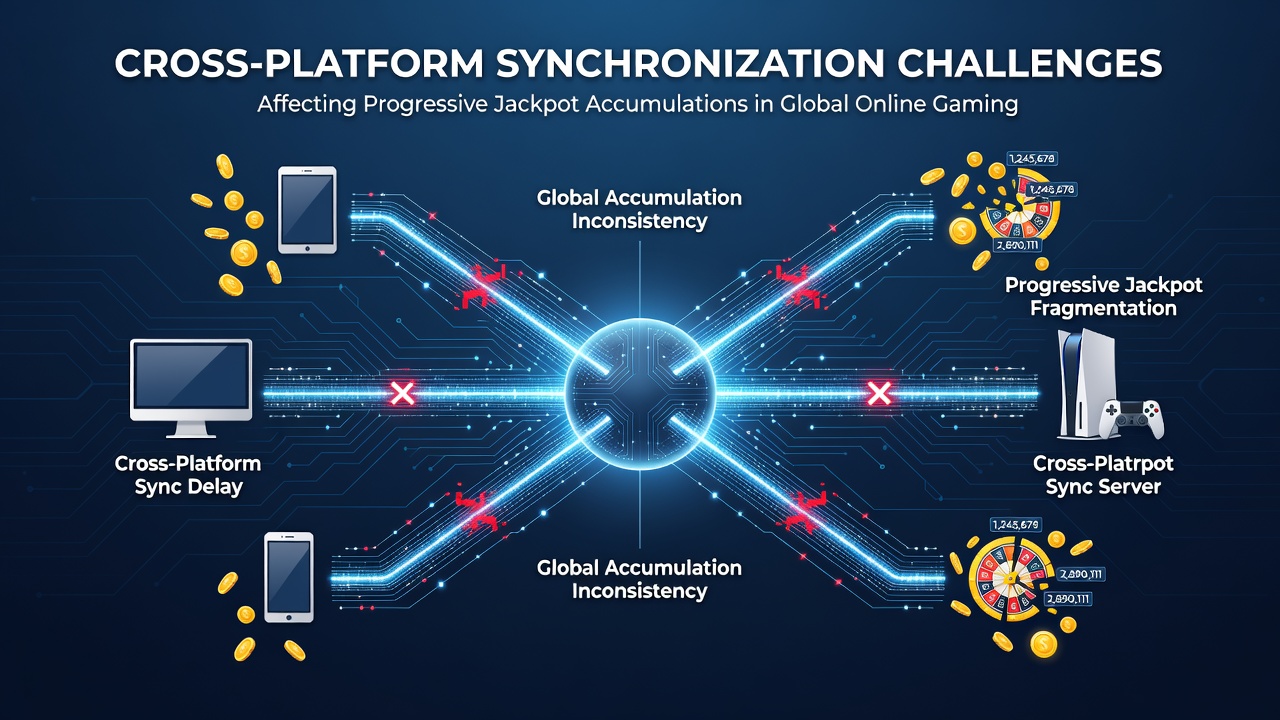
Researchers at institutions studying digital gaming infrastructure have documented cases where packet loss during peak traffic hours caused entire batches of contributions to be excluded from the running total. One study examined logs from a multi-continent network and found that synchronization failures occurred most frequently during evening hours in North America when European and Asian traffic remained high. These patterns highlight the need for more robust queuing mechanisms and redundant pathways.
Regulatory and Currency Complications
Each jurisdiction imposes distinct rules on how jackpot funds are held and reported and these differences affect how quickly contributions can be integrated into the central pool. Currency fluctuations require continuous conversion calculations that must align with the moment a bet is placed rather than the moment the data arrives at the central server. According to data released by the Nevada Gaming Control Board operators must maintain detailed audit trails for every transaction which adds processing overhead during cross-border transfers.
Additional requirements from bodies such as provincial regulators in Canada further complicate matters because they demand separate reporting formats that do not always map cleanly onto the data structures used by international aggregators. When conversion rates change rapidly during live events the system must recalculate prior contributions retroactively in some cases creating brief periods where displayed totals appear inconsistent to players.
Impact on Player Experience and Operator Operations
Players who follow jackpot progress across several sites sometimes notice sudden jumps or pauses in the displayed amount and these observations can reduce confidence in the fairness of the system. Operators respond by implementing buffer accounts that temporarily hold contributions until full verification occurs yet this approach introduces its own delay. Industry reports indicate that reconciliation processes now consume a measurable portion of daily operational resources at large network providers.
Technical staff at several major platforms have begun deploying machine-learning models to predict and compensate for typical latency patterns based on historical traffic data. These models adjust contribution estimates in advance so that visible totals remain stable even when actual data packets arrive slightly out of sequence. Early results from trials conducted through mid-2026 show reduced discrepancy rates though full network-wide adoption remains gradual.
Conclusion
Cross-platform synchronization for progressive jackpots continues to present technical, regulatory and operational challenges as global networks grow more interconnected. Data from regulatory filings and infrastructure studies reveal that operators invest significant resources in maintaining alignment across borders while new tools such as predictive algorithms offer partial relief. Continued collaboration between software providers, regulators and network engineers will determine how effectively these systems adapt to increasing scale and complexity in the years ahead.