How Edge Computing Reduces Processing Delays During Live International Sportsbook Events
Mara Keller · Aug 18, 2026
How Edge Computing Reduces Processing Delays During Live International Sportsbook Events
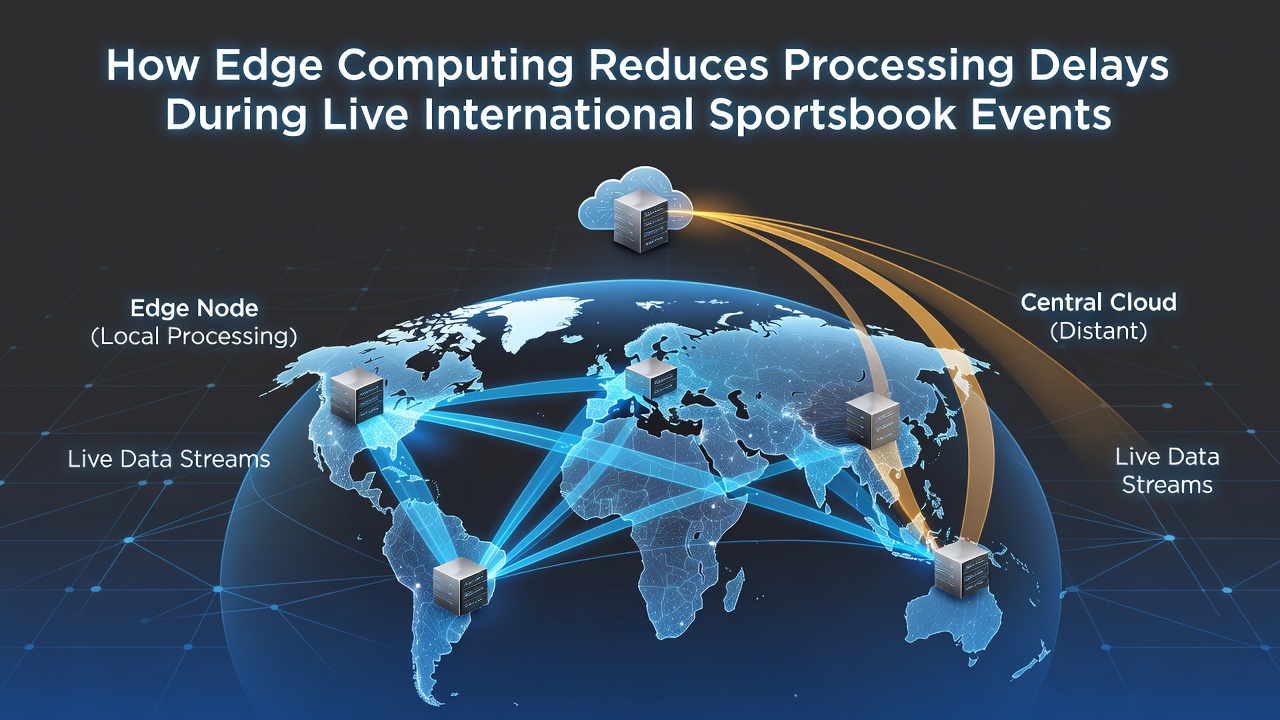
Live international sportsbook events demand instantaneous data handling because bettors place wagers on rapidly changing outcomes during matches such as soccer tournaments or tennis grand slams, and traditional centralized servers often introduce noticeable lags when traffic spikes across continents. Edge computing addresses this challenge by positioning processing nodes nearer to the data sources and end users, which cuts transmission times while maintaining the integrity of odds calculations and settlement processes. Researchers have documented how these distributed systems handle incoming streams from multiple global venues without routing everything through distant core facilities, and the approach proves especially useful during high-volume periods when thousands of simultaneous bets arrive from different time zones.
The Mechanics Behind Reduced Latency
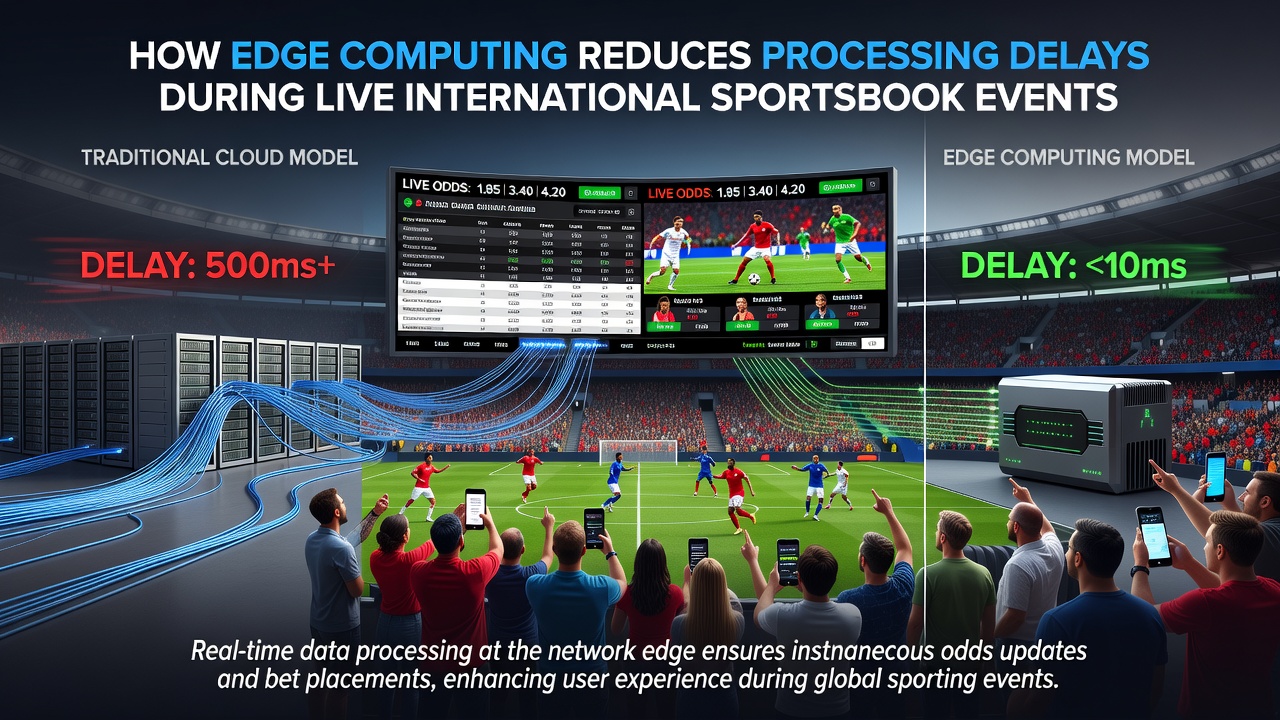
Centralized cloud setups route every transaction through distant data centers, yet edge nodes perform filtering, validation, and preliminary computations locally before syncing essential results back to the main network. This architecture trims round-trip times from hundreds of milliseconds down to single-digit figures in many documented deployments, according to studies compiled by the IEEE Communications Society. During live events operators can update odds on player injuries or point spreads within fractions of a second because the relevant algorithms execute on hardware positioned inside or adjacent to major stadiums and regional hubs. Data shows that such proximity also lowers packet loss rates when network congestion occurs across undersea cables linking continents, which keeps betting interfaces responsive even as viewership peaks.
Applications in Global Sportsbook Operations
Operators managing cross-border platforms integrate edge servers at key exchange points in North America, Europe, and Asia-Pacific regions so that bet placement requests from Australian users during a European football match avoid unnecessary trans-Pacific hops. One deployment tracked by the Australian Communications and Media Authority revealed consistent sub-50-millisecond response windows for live proposition bets throughout the 2025-2026 season. Platforms further use these nodes to cache frequently accessed statistics and video thumbnails, which reduces server load while preserving regulatory audit trails that must travel to central compliance systems. Observers note that this layered approach supports simultaneous handling of in-play markets across multiple sports without forcing users to refresh screens or encounter frozen interfaces.
Performance Metrics and Regional Comparisons
Figures released in August 2026 by the Canadian Gaming Association indicated that sportsbooks employing edge infrastructure recorded average bet confirmation times 68 percent faster than legacy setups during overlapping NHL and Premier League fixtures. Those measurements covered sessions originating from both urban centers and remote areas, demonstrating that the benefits extend beyond metropolitan networks. European operators reported similar gains when processing wagers on tennis matches streamed from North American courts, where edge processing allowed real-time handicap adjustments without the delays previously observed during transatlantic data exchanges. The pattern holds across device types because mobile applications and desktop clients alike connect to the nearest node rather than a single distant endpoint.
Integration Challenges and Technical Solutions
Deploying edge resources requires careful synchronization protocols to ensure that all nodes reflect identical odds and account balances at every moment, while security standards must match those enforced at core facilities. Industry reports highlight encryption methods and distributed ledger checkpoints that maintain consistency without reintroducing latency. Operators also coordinate with local internet service providers to guarantee bandwidth allocation during scheduled mega-events, and testing regimens conducted ahead of the 2026 FIFA World Cup demonstrated stable performance under simulated peak loads. These preparations address potential single points of failure by maintaining redundant nodes that activate automatically when primary paths experience interruptions.
Conclusion
Edge computing continues to reshape how international sportsbooks manage real-time demands by placing computation closer to both events and participants. The resulting reductions in processing delays support smoother betting experiences across time zones and device ecosystems. Ongoing refinements in node placement and synchronization protocols suggest further gains as global tournaments expand their digital footprints through 2026 and beyond.