Integration of Real-Time Social Media Sentiment into Live Event Betting Interfaces Across International Platforms
Rafael Baumann · Aug 25, 2026
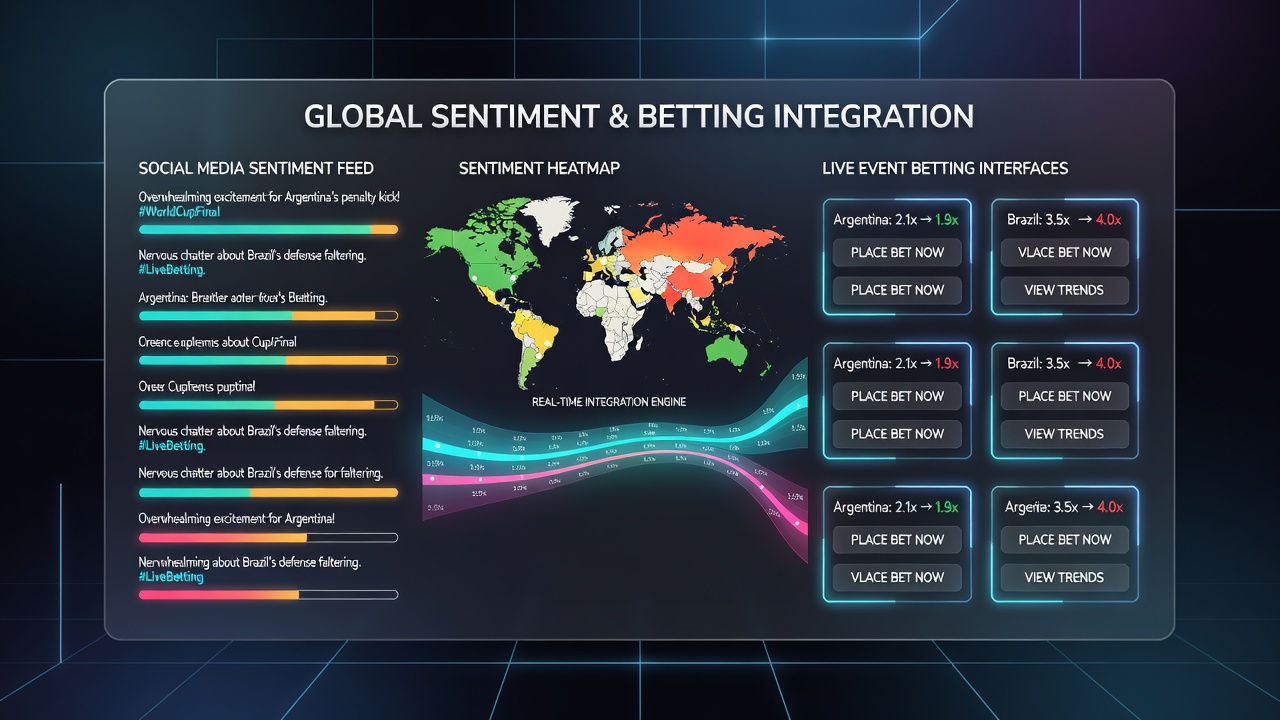
Integration of Real-Time Social Media Sentiment into Live Event Betting Interfaces Across International Platforms
Platforms across Europe, Asia, and the Americas have begun embedding live social media feeds directly into betting interfaces, pulling real-time data from sources like X, Instagram, and regional networks to adjust odds displays during events. This integration allows users to see sentiment metrics such as volume spikes or positive-negative ratios alongside traditional statistics, creating a layered view that updates continuously as matches or competitions unfold.
Technical Implementation Across Borders
Developers connect APIs from social platforms to backend systems that process language models trained on betting-related keywords, and these systems flag trends within seconds of posts appearing. In markets like Australia and parts of Latin America, operators combine this data with location-based filters to ensure only relevant regional conversations influence the displayed metrics, while European operators often prioritize cross-border event coverage where sentiment varies by language and time zone.
Studies from the European Gaming and Betting Association have documented how machine learning pipelines handle multilingual input, converting posts into standardized sentiment scores that feed into interface elements without requiring manual oversight. One study revealed that latency between a viral post and its reflection in odds panels averages under four seconds on major platforms, though accuracy depends on training data quality from prior events.
Regional Adoption Patterns in 2026
By August 2026, operators in Canada and Singapore reported expanded testing of sentiment overlays during international soccer tournaments, where sudden shifts in public discussion correlated with temporary odds movements visible to users. Interfaces in these regions display compact graphs that users can expand for deeper breakdowns, showing how mentions from verified accounts weigh more heavily than general chatter.
North American platforms, operating under state-level frameworks, have integrated similar tools for basketball and baseball events, with data streams limited to approved social sources to maintain compliance. Figures from industry reports indicate that sessions featuring active sentiment panels run longer on average, though operators track this metric separately from overall engagement numbers.
Data Sources and Processing Methods
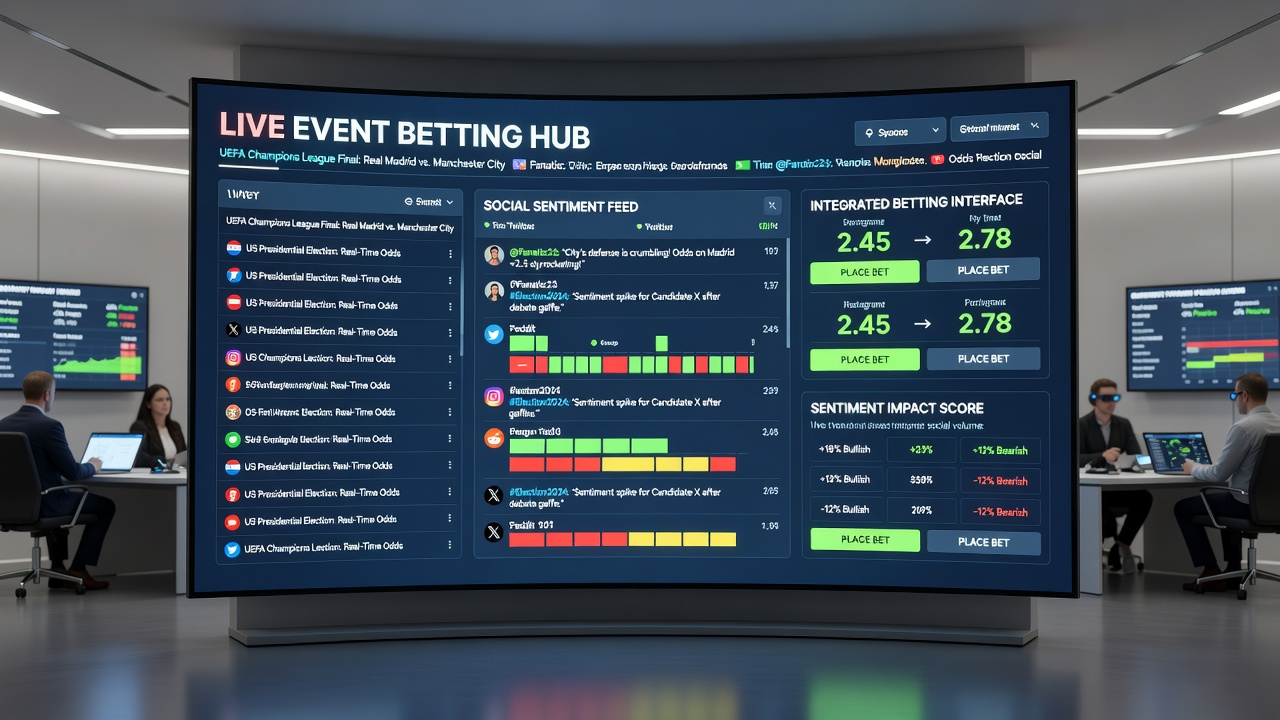
Platforms pull from multiple social channels simultaneously, applying filters that exclude bot activity and focus on verified or high-follower accounts during high-profile events. Academic research published through the Australian Gambling Research Centre has examined how volume thresholds trigger alerts, noting that thresholds differ by sport and region to avoid noise from unrelated discussions. Those who've analyzed the systems note that sentiment scores combine lexical analysis with emoji interpretation and reply-chain context, producing composite values displayed as percentage bars or color-coded indicators.
Cross-border variations appear in how platforms handle data privacy, with some jurisdictions requiring user consent before sentiment features activate, while others embed the tools as default options within account settings. Observers note that integration depth varies, from simple sidebar widgets to full-screen modes that replace standard statistics panels during peak moments.
Impact on User Interfaces and Event Coverage
Live event betting screens now frequently include toggle options that let users activate or mute sentiment layers, and these controls sit alongside traditional bet-slip elements. During international tournaments, platforms synchronize feeds across multiple languages, translating key phrases into localized displays so users in different countries see comparable information. Research indicates that events with strong social media activity, such as championship finals, generate denser data points that update more frequently than lower-profile matches.
Operators in Asia have tested hybrid displays that combine sentiment with weather or injury reports, creating composite views that update as new information surfaces. Data shows these combined elements appear most often in soccer and cricket coverage, where public discussion moves rapidly between topics.
Conclusion
Integration of real-time social media sentiment continues to expand across international betting platforms, driven by API advancements and regional regulatory adaptations that shape how data appears in live interfaces. Platforms refine these features through ongoing analysis of usage patterns, with August 2026 marking further rollouts in additional markets. The approach connects external conversation trends directly to betting displays while maintaining separation between social signals and core odds calculations.